


#35 Suggested Repertoire from Around the World for Developing Bands
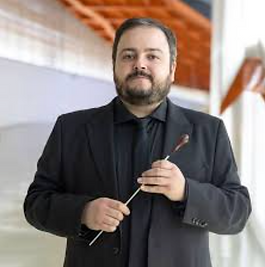
This 35th installment is proposed by Borja Martínez Alegre, Spanish award-winning conductor holding degrees in Trumpet and Conducting, recognized with the Extraordinary Prize in 2022. Currently directing three bands in Valencia, he has triumphed in prestigious competitions in Bilbao and Ostend. His career features extensive international experience conducting across Europe and the USA, alongside three recorded albums and active work as a musical researcher and lecturer.
Grade 2.5
Andante i romança (2024) – 4’15"
Marc Sansalvador-Pérez (Spain, 2004)

Andante i Romança, by the young composer Marc Sansalvador-Pérez, features an instrumentation that effectively balances ensemble flexibility with an artistic colorfulness, demonstrating a masterful command of the band’s registers. The harmonic approach transcends tradition, establishing a serious musical language that intentionally avoids cinematic aesthetics. It is a work of genuine interest that achieves artistic depth within its accessible technical constraints.
Grade 3.5
La Paz de Siete Aguas (2017) – 6’30”
Manuel Bernal-Nieto (Spain, 1980)
Premiered by Sociedad Musical La Paz de Siete Aguas
conducted by Borja Martínez-Alegre on 15 April 2017 in Siete Aguas (Valencia, Spain)

La Paz de Siete Aguas is dedicated to the Sociedad Musical La Paz de Siete Aguas (Valencia, Spain) and its conductor, Borja Martínez-Alegre. While rooted in the tradition of the pasodoble, this work transcends the genre's customary standards through an extended form and a vibrant, coloristic approach to instrumentation. Composer Manuel Bernal-Nieto displays his creative ingenuity through effective orchestration and inventive harmonies, stamping the piece with his personal signature: the sophisticated use of counterpoint.
More on Manuel Bernal-Nieto
Grade 4
Reflexions sobre un territori (2018) – 11’ – Purchase at Tot per l'aire
Rubén Penadés-Silvestre (Spain, 1996)

Reflexions sobre un territori (Reflections on a Territory) embraces the compositional lineage of 20th-century Valencian masters such as Amando Blanquer, Miguel Asins Arbó, and Manuel Palau. The work is structured in three movements—Obertura, Passacaglia, and Quasi Rondo—and draws its thematic material primarily from the traditional music of Ontinyent (Valencia), while also incorporating melodies from Bocairent and Santa Pola.
The first movement interweaves Pasacalle No. 2 from Bocairent with Fandango No. 2 from Ontinyent. The second movement features the poignant folk song from Santa Pola (Alicante), "Les mares són les que ploren" (The Mothers Are the Ones Who Weep). The work concludes with a third movement utilizing the Ontinyent version of the Ball de la Veta, alongside popular tunes such as "Parotet, parotet," "El farol de la retreta," and "Carrer Major de la Vila," before revisiting the theme of "Les mares són les que ploren."
This work received funding for editorial production from the Ministry of Education, Culture, and Sport in 2022.
Grade 5
Multaqa, Deconstructio I (2013) – 9’30” – Purchase at Tot per l'aire
José-Miguel Fayos-Jordán (Spain, 1980)

Multaqa, an Arabic term signifying "meeting" or "gathering," serves as a musical homage to the era of multicultural coexistence in 13th-century Spain. It evokes the spirit of cities such as Toledo and Córdoba, where Muslim, Jewish, and Christian communities lived in harmony, sharing both physical space and intellectual knowledge.
Conceptually, the work is built upon the deconstruction of musical materials from these three traditions. By isolating and reassembling specific motivic cells, the piece constructs a new narrative where ancient elements intertwine to form a unified, collective whole. These foundational motifs generate the work’s structural parameters, including texture, rhythm, counterpoint, and harmony—the latter developed through systems of chord multiplication. The primary thematic sources used are Cantiga 371 by King Alfonso X "The Wise," the Sephardic folk song "Quando el rey Nimrod," and traditional Arabic Maqam scales.
More on José-Miguel Fayos-Jordán


