


#36 Suggested Repertoire from Around the World for Developing Bands
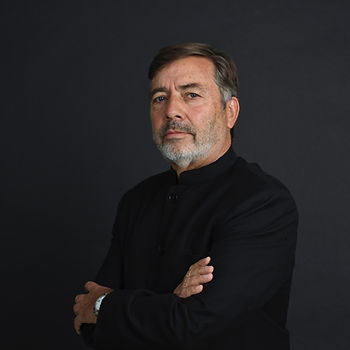
This 36th installment of suggested repertoire is proposed by Felix Hauswirth who studied theory and wind orchestra conducting at the Lucerne Conservatory and continued his education in the USA.
In 1985, he was appointed to the University of Music in Basel, where he was professor of wind orchestra conducting until 2021.
Concert tours have taken him to various countries in Europe, the Middle East, the Far East, Australia, Africa, North America, and South America with numerous ensembles and as a guest conductor.
In December 2009, he was awarded the Mid-West Clinic International Award in Chicago. At the 17th WASBE Conference in Utrecht (Holland) in July 2017, he was named an Honorary Life Member of the World Association for Symphonic Bands and Ensembles.
It is my firm belief that marching music compositions are an integral part of the wind instrument repertoire and that these works are among the best entertainment pieces in this genre. Many great composers have written marches. For the series Suggested Repertoire from Around the World for Developing Bands, I have selected four march compositions by Swiss composers that were written in the first half of the last century. I think all four marches are worth performing. I have re-orchestrated all four compositions for modern wind orchestra. Felix Hauswirth
Grade 3.5
Du Rhône au Rhin (1939) – 5’20" – Purchase at Lucerne Music Edition
Frank Martin (Switzerland, 1890 - 1974)
arr. Felix Hauswirth

«Du Rhône au Rhin» was written as the official march of the Swiss National Exhibition in Zurich in 1939. However, at the opening ceremony of this occasion on May 6, 1939, a version for symphony orchestra orchestrated by Frank Martin was played. Volkmar Andrea conducted the Tonhalle Orchestra Zurich.
The manuscript of the version for wind orchestra no longer exists. In the manuscript department of the Paul Sacher Foundation in Basel there is a particell which may have served as a model for the wind version, as well as the autograph of the arrangement for symphony orchestra. Interestingly, the percussion parts of the two manuscripts are very different. The version for wind band was probably intended more as a marching piece, while the orchestral version corresponded to a concert march.
The present wind band version is based on the original manuscript of the particell from the Paul Sacher Foundation, as well as on the piano reduction by Frank Martin that appeared in print. The percussion parts are newly set, but in strong accordance with the symphony orchestra version.
Grade 4.5
Marche des Ambassadeurs (1939) – 6’30” – Purchase at Lucerne Music Edition
Arthur Honegger (Switzerland, 1892 - 1955)
arr. Felix Hauswirth

Arthur Honegger composed an oratorio Nicolas de Flue for choirs, narrator and wind ensemble in 1939, based on a libretto by Denis de Rougemont. The work tells in three acts about the life of the hermit St. Nicholas of Flue (1417-1487) and his commitment to peace in the conflict between the urban and rural cantons of the Swiss Confederation.
Of the total of 30 scenes, the 20th movement, entitled «Marche des Ambassadeurs», which is introduced by the narrator at the beginning of the third act, is the only one that is purely instrumental.
The oratorio was commissioned by the Institut neuchâtelois , a non-profit Neuchâtel foundation established in 1938, for the 1939 National Exhibition in Zurich.
However, the premiere of the work had to be postponed because of the World War I. After various readings and presentations of the work at various venues in Switzerland, it was finally premiered in Neuchâtel on May 31, 1941.
The present wind band version is based on the original for wind ensemble as well as on the piano reduction.
Grade 3
La Marche Rouge (1914) – 3’50” – Purchase at Lucerne Music Edition
Émile Jaques-Dalcroze (Switzerland, 1865 - 1950)
arr. Felix Hauswirth

As a climax to the July 1914 celebrations of the centenary of Geneva's accession to the Swiss Confederation, the State Council of the Canton of Geneva commissioned a festive spectacle: La Fête de Juin. The music was composed by Émile Jaques-Dalcroze, the texts were by Daniel Baud-Bovy and Albert Malsch, Aloys Hugonnet was responsible for the stage design, and Firmin Gémier was in charge of the staging. The patriotic spectacle shows all phases of Geneva's glorious history, from the earliest epochs to the unification with Switzerland and finally to the golden age at the beginning of the First World War.
«La Marche Rouge» is part of the 4th act of this Geneva historical spectacle. The basis for my edition was the 1914 edition published by Foetisch Frères (S.A.), Éditeurs, Paris/Lausanne, as well as the version for piano four hands arranged by René Charrey (Ed. Foetisch Frères). The percussion parts are newly set.
Grade 3.5
Militärmarsch o. op. No 40 (1949) – 3’ – Purchase at Lucerne Music Edition
Othmar Schoeck (Switzerland, 1886 - 1957)
arr. Felix Hauswirth

The Swiss Radio announced a marching music competition among Swiss composers at the beginning of 1940 to counteract the lack of good Swiss marches. A top-class 5- member jury had the task of finding the best among the numerous compositions submitted. The winning works were premiered on November 23, 1940, by an extended divisional ensemble under the direction of Captain Hans Richard and in the presence of General Henri Guisan at the Kongresshaus Zurich.
Since the delivery of the march written by Othmar Schoeck for the competition was submitted too late, the composition was not accepted for the competition. However, the jury seemed so convinced of the composition that the march was nevertheless performed at the concert with the prize-winning pieces.
Like other composers, Othmar Schoeck submitted his march as a piano score. The Kapellmeister Hermann Hofmann made a harmony setting for it and Hans Heusser orchestrated the work. This version got published in 1941 (Gebrüder Hug & Co., Zurich and Leipzig).
The present version is based on the version for piano two hands and on the autograph, which is in the manuscript department of the Central Library in Zurich.


