


CARL ORFF (1895 – 1982) CARMINA BURANA Transcribed (1994) by Vicente Mas Quiles (1921 - 2021)
COMPOSITION OF THE WEEK – TRANSCRIPTION SERIES
[#347] March 16, 2026
Germany | 1936 | Transcription | Grade 6 | 65’ | Cantate
Premiered by Frankfurt Opera House Orchestra
conducted by Bertil Wetzelsberger on Jul 08, 1937 in Frankfurt
This piece is available for rental at Schoot Verlag
Throughout history, transcriptions have been essential to the artistic and cultural development of the wind band. They opened the door to masterpieces otherwise inaccessible to the medium, providing performers and audiences alike with a broader musical heritage. Beyond serving as valuable pedagogical tools, transcriptions demonstrated the wind band’s unique capacity for color, nuance, and expressive depth, thereby legitimizing it as a serious vehicle of artistic expression. In this light, WASBE’s Composition of the Week seeks to honor such works—proposed by colleagues from around the world—that have shaped the repertoire and affirmed the wind band’s enduring role in the wider musical tradition.
Today’s work is proposed by Italian conductor Denis Salvini.
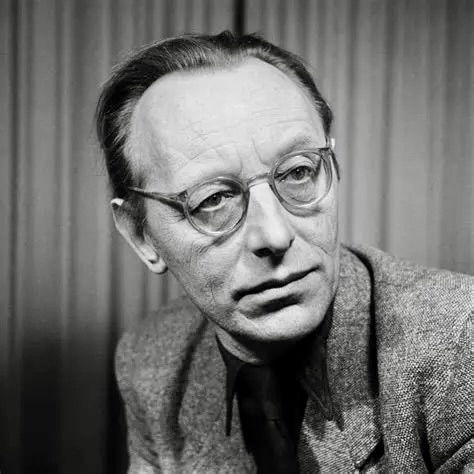
Carmina Burana by German composer and educator Carl Orff is our Composition of the Week.
Carmina Burana was written between 1935 and 1936, and was premiered on July 8, 1937, at the Frankfurt Opera House, in Germany, with Bertil Wetzelsberger conducting.
Carmina Burana is possibly his best-known work and has been transcribed partially or in its entirety by many arrangers for different mediums.
Vicente Mas Quiles’ version for wind orchestra remains very faithful to the original and works extremely well, with a subtle use of flugelhorns, euphoniums, as well as contrabass clarinet, double bassoon, double bass, producing a rich warm, and homogenous sound.
Vicente Mas Quiles was decisive in the development of the Valencian and Spanish band culture, contributing to the repertoire, not only with countless transcriptions that have become classics, such as Geschwindmarsch by Hindemith or this work, but also with countless original compositions, including Dos Sonrisas, De oro y Plata, Clarinera Mayor, among many others.
Maestro Mas Quiles was recognized at the last WASBE Conference 2019 held in Buñol, Spain, with an award in recognition of his career and immeasurable contribution to the world of bands.
His transcription of Orff’s masterpiece is available on rental at Schott Verlag.
Carl Orff's first stage work, Carmina Burana, was composed in 1935-6 and premiered at the Frankfurt Opera in 1937; it became an outstanding success. Orff drew the inspiration for his grand vocal and orchestral work from 24 poems of the 200 found in the 13th century monastery of Benediktbeuern, near Munich in Bavaria, and published in 1847 under the title of Carmina Burana. Carmina is the plural of the Latin word carmen and in early time, carried the implication of student songs. Burana was the Latin name for the area we know today as Bavaria. Both sacred and secular, the texts are frank avowals of earthly pleasure: eating, dancing, drinking, gambling, and lovemaking. They proclaim the beauty of life and the glory of springtime. The music is simple in harmony and range, consistent with 13th century music, with a driving rhythm to which the listener instinctively responds.
In addition to his career as a composer, Orff developed an influential approach toward music education for children.
Orff's family was Bavarian and was active in the Army of the German Empire. His paternal grandfather was a Jew who converted to Catholicism.
Orff started studying the piano at the age of five, and he also took organ and cello lessons. He soon found that he was more interested in composing original music than in studying to be a performer. Orff wrote and staged puppet shows for his family, composing music for piano, violin, zither, and glockenspiel to accompany them. He had a short story published in a children's magazine in 1905 and started to write a book about nature. In his spare time he enjoyed collecting insects.
By the time he was a teenager, having studied neither harmony nor composition, Orff was writing songs; his mother helped him set down his first works in musical notation. Orff wrote his own texts and, without a teacher, learned the art of composing by studying classical masterworks on his own.
In 1911, at age 16, some of Orff's music was published. Many of his youthful works were songs, often settings of German poetry. They fell into the style of Richard Strauss and other German composers of the day, but with hints of what would become Orff's distinctive musical language.
In 1911/12, Orff wrote Zarathustra, Op. 14, an unfinished large work for baritone voice, three male choruses and orchestra, based on a passage from Friedrich Nietzsche's philosophical novel Thus Spake Zarathustra. The following year, he composed an opera, Gisei, das Opfer (Gisei, the Sacrifice). Influenced by the French Impressionist composer Claude Debussy, he began to use colorful, unusual combinations of instruments in his orchestration.
Moser's Musik-Lexikon states that Orff studied at the Munich Academy of Music until 1914. He then served in the German Army during World War I, when he was severely injured and nearly killed when a trench caved in. Afterwards, he held various positions at opera houses in Mannheim and Darmstadt, later returning to Munich to pursue his music studies. He devoted himself to studying the music of the 16th and 17th centuries. For the next fifteen years, he studied Renaissance music, Bavarian folk songs, and ancient languages while developing his concept of elementary music education. In 1924, Orff opened the Guntherschule in Munich, an educational center for rhythmic movement, gymnastics, music, and dance. It was here that his concept — known as the Orff Method - evolved into a synthesis of gesture, poetic language, and music. Music teachers worldwide recognize Carl Orff as one of the two most important music educators in history (the other being Zoltán Kodaly).
Orff is most known for Carmina Burana (1936), a "scenic cantata". It is the first part of a trilogy that also includes Catulli Carmina and Trionfo di Afrodite. Carmina Burana reflected his interest in medieval German poetry. The trilogy is called Trionfi, or "Triumphs". The composer described it as the celebration of the triumph of the human spirit through sexual and holistic balance. The work was based on thirteenth-century poetry found in a manuscript dubbed the Codex latinus monacensis found in the Benedictine monastery of Benediktbeuern in 1803 and written by the Goliards; this collection is also known as Carmina Burana. With the success of Carmina Burana, Orff disowned all his previous works except for Catulli Carmina and the Entrata (an orchestration of "The Bells" by William Byrd (1539–1623)), which were rewritten until acceptable by Orff. Later, however, many of these earlier works were released (some even with Orff's approval).
In 1924, Orff opened the Guntherschule in Munich, an educational center for rhythmic movement, gymnastics, music and dance. It was here that his concept — known as the Orff Method - evolved into a synthesis of gesture, poetic language, and music. Music teachers worldwide recognize Carl Orff as one of the two most important music educators in history (the other being Zoltán Koclály). He is probably best remembered for his Schulwerk ("School Work"). Originally a set of pieces composed and published for the Güntherschule (which had students ranging from 12 to 22), this title was also used for his books based on radio broadcasts in Bavaria in 1949. These pieces are collectively called Musik für Kinder (Music for Children), and also use the term Schulwerk.
Other works for winds include:
• Drei Tänze aus “Der Mond” for double Wind Quintet, arr. F. Wanek (1986)
• Five movements form Carmina Burana for double Wind Quintet, arr: F. Wanek (1981)
• Vier Burleske Szenen aus der Oper “Der Mond”, arr: Hermann Regner (1997)

