


#38 Suggested Repertoire from Around the World for Developing Bands
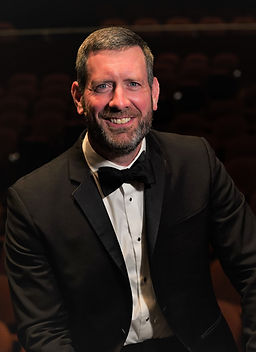
This 38th installment is proposed by Dr. Danny Galyen, Professor of Music and Director of Bands at the University of Northern Iowa. Dr. Galyen conducts the UNI Wind Ensemble and teaches undergraduate and graduate courses in conducting and wind literature. He also serves as conductor of the Waterloo Municipal Band. In 2024 he was inducted into the prestigious American Bandmasters Association. He is active as a guest conductor and conducting teacher in Europe and the US.
Wind bands have always had a special role in celebrating cultural identity. Through their unique position as representatives of the community, bands have contributed to preserving cultural and national pride, community belonging, historical and fictional tales, and folk traditions. For this segment of Repertoire for Developing Bands from Around the World, I chose music that reflects various aspects of cultural identity, with a focus on music with some kind of cultural connection between different communities.
Grade 3
A Jasmine Tree (2017) – 6’ – Purchase at Kevin C Music
Kevin Charoensri (USA, 2003)
Hard copy: Murphy Music Press

Kevin Charoensri is a Thai-American composer whose music blends elements of Asian and American music and culture. His more advanced work for wind band, Rising Light - a musical response to post-COVID anti-Asian hate - was acquired by the Smithsonian National Museum of American History. A Jasmine Tree is appropriate for Grade 3 ensembles and serves as an excellent example of Charoensri’s ability to draw from both Thai and American musical influences.
“My first experiences falling in love with music were Thai temples and Thai street music. And when I came to the United States, I equally fell in love with American-influenced film scores, band pieces, and jazz charts. When I joined band in the 6th grade, I struggled to find music that authentically supported my Thai/Asian background. I desperately wanted to play a piece that authentically represented my early childhood growing up in Thailand. Similar to my wind ensemble piece Rising Light, A Jasmine Tree is inspired by the bi-cultural identity I grew up with, seeking to combine both Thai and American cultures as one. The piece pulls melodic material from Thai/Asian styled phrasing blossoming over American-influenced jazz harmony. The beginning of the piece utilizes these melodies in a traditional contrapuntal style, where instruments slowly enter, similar to a meditation. As the piece progresses, the harmony supports the pentatonic melodies. I wanted to show my interpretation of the Asian-American musical style, as one. I hope A Jasmine Tree gives a voice of representation, while also inspiring and educating up and coming musicians in the beautiful meshing of culture, through music.” - Kevin Charoensri
More on Kevin Charoensri
Grade 5
Roma (2011) – 7' – Purchase at Theodore Presser
Valerie Coleman (USA, 1970)

Valerie Coleman is a Grammy-nominated flutist, celebrated composer, and founder of the Imani Winds. Since 2024 she has served on the faculty of the Julliard School teaching composition and chamber winds. With Roma, she takes a respectful and serious approach to the community known as Romani. She does this by exploring a wide range of musical styles that comprise the music of Romani tribes, through the viewpoint of Romani women.
“A nation without a country is the best way to describe the nomadic tribes known as gypsies, or properly called, the Romani. Their traditions, their language (Roma), legends, and music stretch all over the globe, from the Middle East, the Mediterranean region, and the Iberian peninsula, across the ocean to the Americas. Roma is a tribute to that culture, in five descriptive themes, as told through the eyes and hearts of Romani women everywhere: Romani Women, Mystic, Youth, Trickster, and History. The melodies and rhythms are a fusion of styles and cultures: malagueña of Spain, Argentine tango, Arabic music, Turkish folk songs, 3/2 Latin claves, and jazz. In 2010, a consortium sponsored by the College Band Directors National Association's Committee on Gender and Ethnic Issues, offered Coleman a commission with very specific guidelines: In addition to the stipulation that the composer be from an underrepresented community, the premiere performance would be awarded to a high school with a largely minority student body – Roma High School, in Roma, Texas.” - Valerie Coleman
More on Valerie Coleman
Grade 3
There is no song for singing (2024) – 7’ – Purchase at Murphy Music Press
José Ignacio Blesa Lull (Spain, 1984) Hard copy: https://murphymusicpress.com/products/cb3-1,358
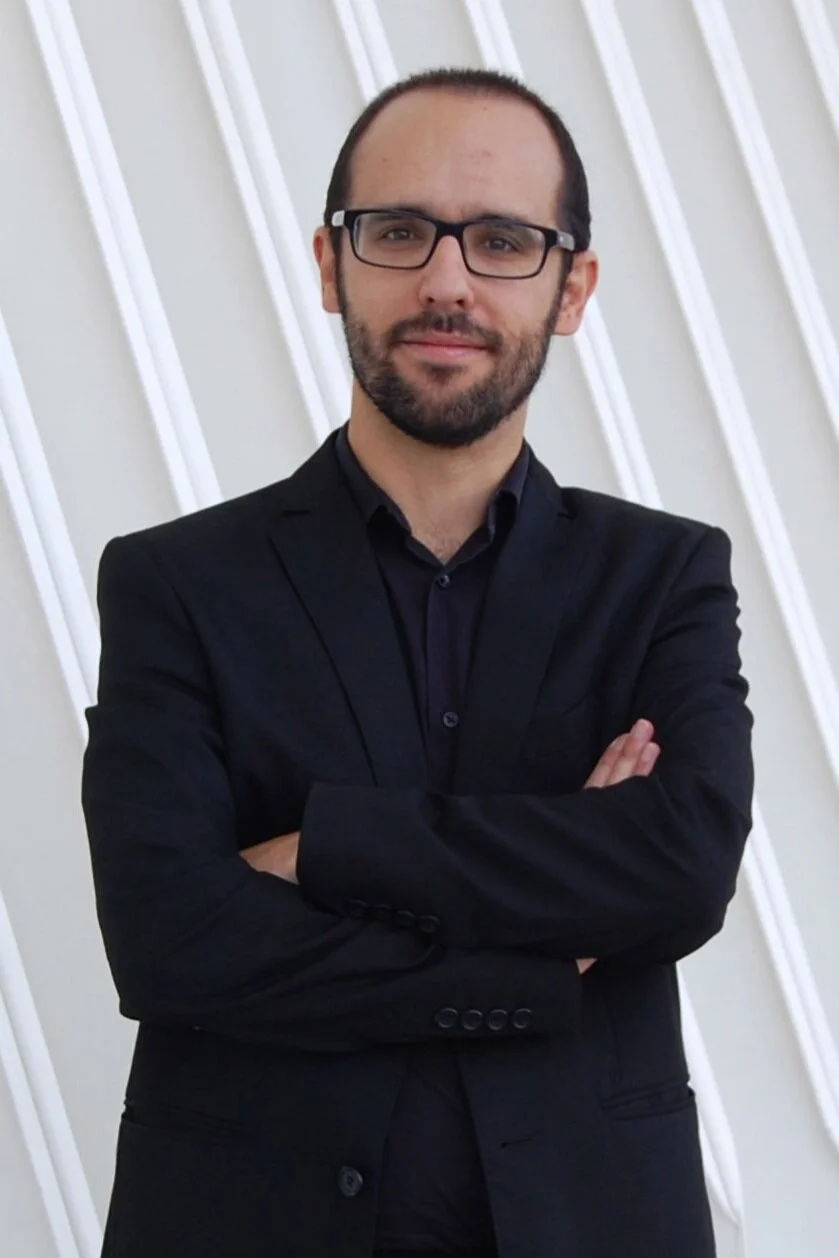
José Ignacio Blesa-Lull is a composer, conductor, and teacher in Valencia, Spain. He is principal conductor of the Symphonic Band at Centre Artístic Musical de Bétera and founder of Turia Chamber Winds. His catalog includes a number of compositions for wind band from Grades 1-6.
His 2024 composition There is no song for singing provides unique opportunities for performance and teaching. Performers have the opportunity to engage with two Croatian folk songs, which are used as source material and developed in variation over the remainder of the piece. The composition begins with two groups of musicians in the audience for a processional to the stage. These groups play in a call-and-response manner typical of the folk songs. The final section includes aleatoric elements for both winds and percussion.
The composers description of the piece states: “This music was composed after a petition of Mario Komazin, to be premiered by the band he conducts, the Gradski Puhački Orkestar Križevci (Croatia). The motivic material of the piece, has been taken from the interesting folk music of the region, specifically from two songs titled I Ovo Se Klajna Zeleni Juraj, Kirales (Here, Green George is Bowing) and Nema Pisme Nit Pivanja (There is no song for singing). Since both are sung in a responsorial way, that inspired me to start the piece with a sort of “procession” with two groups walking towards the stage. These groups, dialogue with their own soloists and the rest of the band which is waiting on the stage, imaging somehow the original song. The rest of the piece is a continuous variation of the melodies we heard on this very beginning of the music.” - José Ignacio Blesa-Lull
More on José Ignacio Blesa-Lull
Grade 4
Children’s Folksong Suite (2007) – 8’35” – Purchase at Keveli Music
Kevin Walczyk (USA, 1964)

This is a colorful setting of five Hungarian folk songs from composer Kevin Walczyk, who is Professor of Music at Western Oregon University and has composed a number of outstanding and serious works for band. Children’s Folksong Suite is in five short movements. Walczyk uses frequent tempo changes, a varied and colorful orchestration, and inventive contemporary harmonies to create an exciting, mature, and thoughtful setting of these folk songs, all while maintaining the whimsy of children’s music and also keeping the technical skill requirements appropriate for developing players at the Grade 3 or 4 level. Conductors may also select specific movements for performance rather than the entire work.
“Children's Folksong Suite for concert band is based on five Hungarian folk melodies with a simple, child-like character that have been culled from sources published between 1813 and 1896. The five melodies are also found in a collection of Hungarian and Slovakian folk songs in Béla Bartók's piano collection entitled For Children. As with Bartók's Mikrokosmos and his Forty-four Violin Duets, For Children is an expression of Bartók's interest in composing accessible works for young musicians that introduces them to contemporary harmonic resources rarely encountered at the beginning level. Similarly, the five folk melodies set in Children's Folksong Suite have been completely re-harmonized and, in some instances, expanded. Although not bound by common-practice theoretical expectations, Children's Folksong Suite preserves each piece's unique, child-like character. Children's Folksong Suite is dedicated to the members of the Leslie Middle School band (Salem, Oregon) and their former conductor Dr. Danh Pham, who commissioned the work.” - Kevin Walczyk
More on Kevin Walczyk
Grade 3
Belah Sun Woman (2014) – 8’ – Purchase at GIA Publications
Jodie Blackshaw (Australia, 1971)

Belah Sun Woman represents a “project piece” that provides opportunities for musical growth, learning, and exploration while preparing a performance of a composition of high artistic value. Teaching and assessment strategies for each movement are provided, as well as a DVD with visual demonstrations of activities. The first movement is not conducted and all players perform with rhythmic chanting, body percussion, and use drumsticks on parts of their chair and stand. Body percussion and rhythmic chanting/whispering appear in the remaining movements as well. The Mallet Percussion 2 part calls for Joia tubes, which can be purchased online. There is also an opportunity for an optional narrator between movements. Belah Sun Woman provides a detailed, immersive opportunity for dedicated teaching, exploring, and learning about music.
The composer describes the piece as follows:
“Belah Sun Woman is a work in 5 movements that is inspired by an Indigenous narrative not attributed to any specific people, that tells of the birth of the sun. The first movement paints the character of the fierce antagonist with a battery of percussion. The second movement sets the scene, describing a world with little light. There is much fear and tension amongst the people who live at this time; this movement features the brass section. The third movement presents the protagonist, a much loved, heroic personality whose character is peppered by joyous woodwinds in triple meter. In the fourth movement, there is a battle between our two main characters. Hear this, as you will: a fight for freedom, a confrontation for truth, or a struggle to gain peace. This movement features the percussion section and allows them to improvise and explore the colors of their instrument. The fifth and final movement brings the whole band together and contains many independent lines. This movement brings our narrative to a close and is inspired by the vision of the first sunrise on Earth.” - Jodie Blackshaw
More on Jodie Blackshaw
Grade 5
Bury and Rise (2023) – 14’ – Purchase at Murphy Music Press
Catherine Likhuta (Ukraine, 1981)

Catherine Likhuta is a Ukrainian-Australian composer whose music “exhibits high emotional charge, programmatic nature, rhythmic complexity and Ukrainian folk elements.” Bury and Rise was written in response to the Russian invasion of Ukraine in 2022. Of the music I have presented here, this is the most difficult piece, and while listed as a Grade 5, conductors should be aware that the music requires a strong pianist, and is best if harp and string bass are present. It also requires five percussionists and the timpani part calls for five timpani. Conductors who find this piece too difficult may wish to explore one of her many less advanced works, which are also outstanding. Bury and Rise draws inspiration from Ukrainian folk music and poetry, best described below by the composer:
“In February 2022, the world was shocked by Russia’s barbaric invasion of Ukraine. My 60-year-old disabled mother lived in Kyiv at the time and did not survive the attack on the city. Later, I was approached by Dallas Winds with a commission request for a piece which would celebrate the stoic heroism of the Ukrainian resistance. I quickly realized that my brain has repressed many or most traumatic memories of these past few months. The start of the full-scale war and many of the subsequent developments felt absolutely surreal. Perhaps, it is only through music that I can express what I need to say about these events. There are no words to describe how important this commission is to me. The piece will feature the key elements of Ukrainian folk music and its gutsy, almost tribal, yet wonderfully optimistic spirit. The capabilities of wind band fit perfectly with Ukrainian musical traditions -- from the band’s angular rhythms to its brilliant runs on woodwinds going up against heroic brass and colourful percussion. Furthermore, there are numerous possibilities to imitate traditional Ukrainian instruments with the core band arsenal: piccolo and flute can sound just like sopilka, horn makes an excellent trembita, and harp is a great substitute for bandura. The title of the piece, Bury and Rise, is a loose translation of a line from the iconic poem Zapovit (“Testament”, 1861) by Taras Shevchenko, arguably the most important artist for the Ukrainian identity. Shevchenko asks to bury him when he passes and then rise to defend the homeland. That is exactly what Ukrainians have done. Bury and Rise will be an ambitious project celebrating their spirit, their never-ending optimism against all odds, and -- as a news reporter recently put it -- their stamina as the fastest renewable energy source.” - Catherine Likhuta
More on Catherine Likhuta


