


PARIS SKETCHES Homages for Band by MARTIN ELLERBY (England, 1957)
[#343] Feb 16, 2026
England | 1994 | Symphonic Band | Grade 5 | 15’ | Suite
This piece is available for purchase at Maecenas
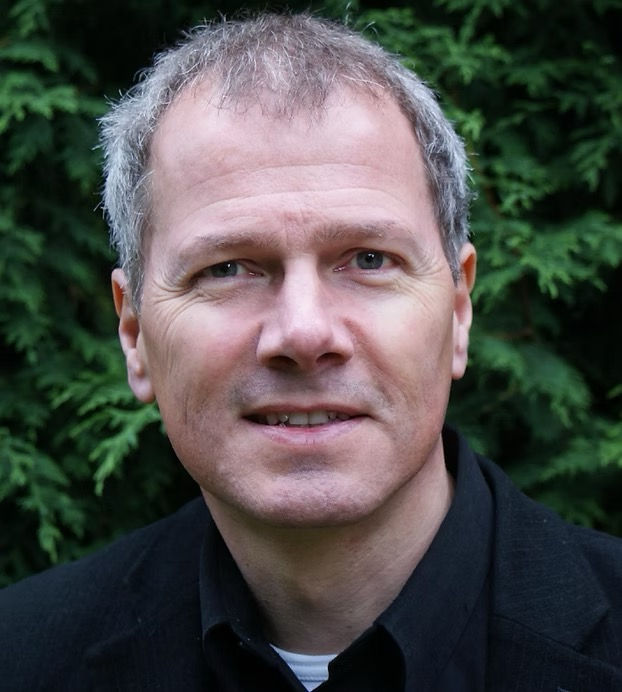
Paris Sketches, by British composer Martin Ellerby is our Composition of the Week.
“Specially commissioned by the BASBWE Consortium to meet the requirements of bands of mixed ability and uncertain attendance but making no artistic compromises. Poetic, humorous, wistful, and thrilling, its four movements vividly evoke the spirit - and some of the composers - associated with the great city.”
The four movements of Paris Sketches are 1. Saint-Germain-des-Près; 2. Pigalle; 3. Père Lachaise; 4. Les Halles. They are described here below by the composer:
“This is my personal tribute to a city I love, and each movement pays homage to some part of the French capital and to other composers who lived, worked, or passed through it -- rather as did Maurice Ravel in his own tribute to the work of an earlier master in Le Tombeau de Couperin. Running like a unifying thread through the whole score is the idea of bells -- a prominent feature of Paris life.
Saint-Germain-des-Prés: The Latin Quarter famous for artistic associations and bohemian lifestyle. This is a dawn tableau haunted by the shade of Ravel: the city awakens with the ever-present sense of morning bells.
Pigalle: The Soho of Paris, this is a burlesque with scenes cast in the mold of a balletic scherzo -- humorous in a kind of “Stravinsky-meets-Prokofiev” way. It’s episodic, but everything is based on the harmonic figuration of the opening. The bells here are car horns and police sirens!
Père Lachaise: This is the city’s largest cemetery, the final resting place of many a celebrity who had once walked its streets. The spirit of Satie’s Gymnopédies -- themselves a tribute to a still more distant past -- is affectionately evoked before what is in effect the work’s slow movement concludes with a quotation of the Dies Irae. The mood is one of softness and delicacy, which I have attempted to match with more transparent orchestrations. The bells are gentle, nostalgic, wistful.
Les Halles: A fast, bustling finale; the bells triumphant and celebratory. Les Halles is the old market area, a Parisian Covent Garden, and like Pigalle, this is a series of related but contrasting episodes. Its climax quotes from Hector Berlioz’s Te Deum, which was first performed in 1855 at the church of St. Eustache -- actually in the district of Les Halles. A gradual crescendo, initiated by the percussion, prefaces the opening material proper, and the work ends with a backward glance at the first movement before closing with the final bars of the Berlioz Te Deum.”
The music is scored for standard wind band setting, including piano and four percussion parts, has a duration of 15 minutes and it is available at Maecenas. A 10th anniversary edition (2004) was prepared by Tim Reynish.
Paris Sketches has been chosen as test piece for the 1st WASBE International Conductors Competition 2026.
Martin Ellerby studied composition with Joseph Horovitz and counterpoint with W. S. Lloyd Webber at the Royal College of Music. Following this he studied privately with Wilfred Josephs later becoming the composer’s amanuensis.
He has written in most forms including several sinfonias and concertante works, music for strings, several instrumental sonatas and suites, songs and choral music including a Mass for choir and orchestra. He has also written test pieces for all the key brass band contests (Tristan Encounters, Elgar Variations, Genesis, Electra etc.) and much repertoire for concert band (Paris Sketches, Venetian Spells, Meditations, Via Crucis, etc.). Additionally, he has composed examination and sight-reading material for the Associated Board of the Royal Schools of Music (ABRSM) and other educational bodies and publishers.
His music has been broadcast and recorded all over the world by leading ensembles and performed at prestigious venues including the Royal Albert Hall, Royal Festival Hall, St. Paul’s Cathedral, Barbican and Wigmore Halls in London; Carnegie Hall and the Lincoln Center in New York City; Leipzig’s Gewandhaus and St. Thomas Church in Germany; La Madeleine in Paris and the Sydney Opera House in Australia. He has been twice represented at the BBC Henry Wood Promenade Concerts at the RAH (broadcast on BBC Radio 3). A 7 year post as civilian composer-in-residence to the Regimental Band of Her Majesty’s Coldstream Guards resulted in much music for specific State events, Royal occasions, and overseas tours.
Amongst his awards and citations are the W. S. Lloyd Webber Director’s Prize, the Westminster Prize, the Arts Council of Great Britain Dio Fund Award, an Allcard Award, the George Butterworth and Norman Sykes Memorial Fund Awards, the Freedom of the City of London, the Royal Military School of Music 2008 Dr. Martin Ellerby Class, the 2012 BUMA International Brass Award (Holland), and, in his 60th birthday year (2017), the John Henry Iles Medal of the Worshipful Company of Musicians.
He holds a Doctor of Musical Arts Degree (DMA) from the University of Salford, an Honorary Doctor of Letters Degree (Hon DLitt) from the University of West London and five fellowships. He is the Artistic Director for Studio Music Company (London), External Examiner to the Royal Air Force Music Services (RAF Northolt) and Honorary Principal of the Victoria College of Music Examinations Board. Overseas lecture tours include North and South America, Europe, and Australasia.
Other works for winds include:
• Venetian Spells (1984)
• Dona Nobis Pacem (1995)
• Clarinet Concerto (2001)
• The Cries of London (2005)
• Menorcan Dances (2019)
• Wirral Dances (2025)
• Tristan Encounters (for Brass Band)
• Elgar Variations (for Brass Band)
More on Martin Ellerby


